

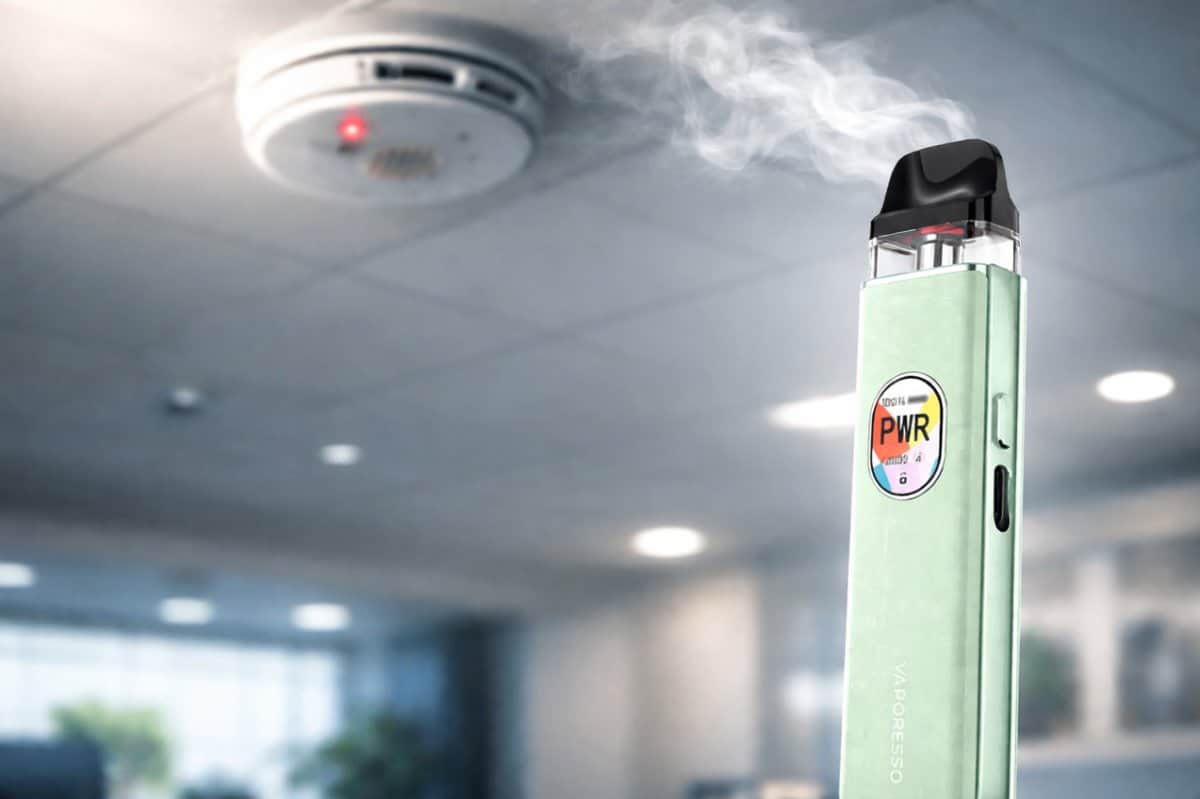
Can Vapes Set Off Smoke Alarms
Can Vapes Set Off
Smoke Alarms?
Yes potentially. UK photoelectric plus aspirating detectors can trigger from dense vape clouds. UK ionisation detectors less sensitive. UK heat detectors will not trigger. Risk depends on detector type, cloud density plus proximity. Check UK venue policy before vaping indoors.
Yes vapes can set off UK smoke alarms, depending on detector type plus conditions. UK detector sensitivity ranking. UK aspirating smoke detectors. Highly sensitive. Actively sample air. Used in UK data centres, hospitals, sensitive environments. Will almost certainly trigger. UK photoelectric detectors. Sensitive. Use light beam scatter detection. Can trigger from dense vape clouds. Most common in UK hotels, offices plus public buildings. UK multi-sensor detectors. Moderate to high sensitivity depending on sensor combination. Increasingly common in UK commercial settings. UK ionisation detectors. Less sensitive to vape aerosol. Primarily detect combustion particles. Historically common in UK homes but less so now. Can still trigger with very heavy clouds near detector. UK heat detectors. Will not trigger. Only respond to high temperatures. Common in UK kitchens plus some UK commercial spaces. UK risk factors. Cloud density (sub-ohm devices higher risk). Proximity to detector (closer equals higher risk). Airflow (poor ventilation traps vapour near detectors). Duration (repeated vaping in closed space builds aerosol concentration). Device power (higher wattage produces more vapour). UK hotel specifics. Most UK hotels use photoelectric or multi-sensor detectors. UK hotel policies typically treat vaping as smoking. Cleaning fees £100-£250+ typical. Fire brigade callout charges possible. Potential UK legal action. UK workplace plus public buildings. Similar detection risks. UK 2007 Health Act extended to many UK workplaces. Vaping policies vary by employer. Safer UK alternatives. Use designated UK outdoor vaping areas. Vape in private UK vehicles. Use UK vape-permitted hotels (some UK boutique options exist). Never tamper with UK fire alarms (illegal plus dangerous). UK legal UK consequences. Deliberately triggering UK alarms can incur £350+ callout charges. Tampering with UK alarms breaches fire safety regulations. UK hotel disputes can reach small claims court. Always comply with UK venue policies.
Three numbers behind
UK vape smoke detection
Possibility, detector type plus risk factors.
UK trigger risk
Yes UK vapes can trigger smoke alarms depending on detector type plus conditions. Not guaranteed.
UK most sensitive
UK photoelectric plus aspirating detectors most sensitive to vape aerosol. Common in UK hotels plus offices.
UK risk variables
Cloud density, proximity to detector plus airflow. All three affect UK trigger likelihood.
UK vape smoke detection in five parts
Understanding whether UK vapes can trigger smoke alarms requires knowing detector types plus conditions. Five parts cover UK detector technology, which types are most sensitive, risk factors, hotel plus public building specifics plus safer UK alternatives.
Part 1: UK smoke detector types
Five main UK technologies:
- UK ionisation detectors. Use radioactive isotope to ionise air. Detect combustion particles disrupting current. Historically most common in UK homes. Less common now.
- UK photoelectric (optical) detectors. Use light beam plus detect particles scattering the beam. Sensitive to larger particles including smoke plus vape aerosol.
- UK heat detectors. Trigger at specific temperatures (typically 58°C fixed or rapid rise). Common in UK kitchens where smoke detectors impractical.
- UK multi-sensor (combination) detectors. Combine photoelectric plus heat or other sensors. Reduce false alarms plus increase accuracy.
- UK aspirating smoke detection (ASD). Actively sample air through pipework. Extremely sensitive. Used in UK data centres, hospitals, museums.
- UK beam detectors. Use long-distance light beams across large UK spaces. Used in UK warehouses, large halls.
- UK CO detectors. Detect carbon monoxide not smoke. Will not trigger from vaping.
- UK regulatory standards. BS EN 14604 for UK domestic smoke alarms. BS 5839 for UK commercial fire detection.
Part 2: which UK detectors trigger from vaping
Sensitivity ranking:
- UK aspirating detectors. Highest sensitivity. Will almost certainly trigger from vape clouds. Used in UK sensitive environments.
- UK photoelectric detectors. High sensitivity to vape aerosol. Light scattering mechanism responds well to aerosol droplets.
- UK multi-sensor detectors. Usually include photoelectric so can trigger. Heat component will not. Combined logic may reduce vape false alarms.
- UK ionisation detectors. Lower sensitivity to vape vapour. Can still trigger with heavy clouds near detector. Less common now in UK.
- UK heat detectors. Cannot trigger from vaping. Only respond to high heat.
- UK beam detectors. Moderate sensitivity. Long beams less sensitive to localised vape clouds but heavy use can trigger.
- UK hotel detector mix. Typically photoelectric or multi-sensor. Vape risk is high.
- UK office detector mix. Similar. Photoelectric or multi-sensor dominant.
- UK public building mix. Photoelectric, multi-sensor plus sometimes aspirating in sensitive areas.
Part 3: UK risk factors for triggering
What affects likelihood:
- Cloud density. Sub-ohm UK devices producing large clouds significantly increase risk.
- Proximity to detector. Vaping directly below or near a UK detector dramatically increases trigger likelihood.
- Airflow plus ventilation. Poor ventilation traps aerosol near detectors. Open UK windows reduce risk.
- Duration plus frequency. Single quick puff less risky than extended vaping session.
- Device power. Higher wattage UK devices produce denser aerosol. Increased trigger risk.
- Room size. Small UK rooms concentrate aerosol faster. Bathrooms particularly risky.
- VG/PG ratio. High VG e-liquids produce thicker clouds. Higher detection risk.
- Detector sensitivity setting. UK commercial detectors often more sensitive than domestic.
- Detector age plus maintenance. New UK detectors often more sensitive. Well-maintained systems more accurate.
- HVAC operation. UK central heating plus air conditioning can move vapour toward detectors.
- Window open or closed. Open UK windows dramatically reduce aerosol concentration.
Part 4: UK hotel, workplace plus public building specifics
Real-world UK scenarios:
- UK hotels. Typically photoelectric or multi-sensor. Most UK hotel policies treat vaping as smoking.
- UK hotel cleaning fees. £100 to £250+ typical. Charged if vaping detected even without alarm.
- UK hotel fire brigade callouts. £350+ possible. Potential UK eviction.
- UK hotel legal consequences. UK 2007 Health Act breach possible. Small claims court for costs.
- UK offices. UK 2007 Health Act applies to enclosed UK workplaces. Vaping policies vary by UK employer.
- UK office detection. Photoelectric plus multi-sensor common. Trigger risk exists.
- UK public buildings. UK shops, restaurants, cinemas. Vaping typically prohibited.
- UK transport. UK trains, buses, stations all prohibit vaping. Detection plus CCTV both risks.
- UK data centres. Aspirating detectors extremely sensitive. Never vape near UK data centre equipment.
- UK hospitals. Aspirating plus multi-sensor common. UK NHS sites strict vaping policies.
- UK schools plus universities. Strict detection plus policy enforcement.
- UK rental properties. UK tenancy agreements often restrict vaping. Cleaning costs recoverable.
Part 5: safer UK vaping approaches
How to avoid issues:
- Use designated UK outdoor vaping areas. Safest approach. No detection risk.
- Vape in private UK vehicles. No detection. No public policy breach. Consider passengers plus driving laws.
- Check UK venue policy. Always check specific UK hotel, office plus building policy first.
- UK vape-permitted hotels. Some UK boutique options exist. Book specifically.
- Never tamper with UK alarms. Covering, disabling or removing UK alarms breaches UK fire safety regulations.
- Tampering consequences UK. Fines, eviction, criminal prosecution plus insurance implications.
- Near UK open windows. If vaping is permitted but detectors present, near open windows reduces risk.
- Lower-power UK devices. MTL devices produce less vapour than sub-ohm. Lower detection risk if vaping is permitted.
- Exhale toward UK ventilation. Not upward toward ceiling detectors.
- Avoid bathroom UK vaping. Small spaces concentrate aerosol. High detection risk.
- UK honest approach. If policy prohibits vaping do not attempt to vape. Use UK designated areas.
- UK smoke alarm tampering is illegal. Under UK 2005 Regulatory Reform (Fire Safety) Order. Up to £5,000 fine.
Four UK facts about
vapes plus smoke alarms
Yes UK vapes can trigger alarms
Depends on UK detector type plus conditions. Not guaranteed but real risk with photoelectric plus aspirating detectors.
UK hotels use sensitive detectors
Photoelectric or multi-sensor typical. Vape trigger risk real. UK cleaning fees plus potential UK legal action.
Three UK risk factors
Cloud density, proximity to detector plus airflow. Sub-ohm UK clouds, close proximity plus poor ventilation increase UK risk.
Never tamper with UK alarms
Illegal under UK 2005 Fire Safety Order. Up to £5,000 fine. Use designated UK outdoor vaping areas instead.
UK detectors that can trigger vs
UK detectors that cannot trigger
Understanding UK detector types helps assess risk in different UK environments. Both categories exist in UK buildings. Knowing which type is installed helps UK vapers make informed decisions about indoor vaping.
Sensitive to vape aerosol
- ✓UK aspirating detectors. Highly sensitive. UK data centres.
- ✓UK photoelectric detectors. Common in UK hotels plus offices.
- ✓UK multi-sensor detectors. Often include photoelectric.
- ✓UK beam detectors. Moderate sensitivity in UK large spaces.
- ✓UK ionisation detectors. Less sensitive but possible with heavy clouds.
- ✓UK bathroom detectors. Small UK spaces trigger easily.
Temperature or gas specific
- ✓UK heat detectors. Only respond to high temperatures.
- ✓UK rate-of-rise heat detectors. Rapid temperature change only.
- ✓UK fixed-temperature detectors. Typically 58°C threshold.
- ✓UK CO detectors. Carbon monoxide specific. Not vapour.
- ✓UK kitchen heat detectors. Chosen specifically to avoid cooking false alarms.
- ✓UK gas detectors. Specific gas detection. Not aerosol.
Smoke alarms are one of several UK vape detection plus travel considerations. For the full picture visit our travel hub.
Back to the Travel hub
This article sits inside our UK vape travel knowledge base. Head back to the hub for the full index covering UK flights, hotels, pubs, trains, driving, public spaces plus every UK travel scenario you might face as a vaper.
More UK travel guides
Smoke alarm detection connects to wider UK vape travel issues. Our piece on can you vape in hotel rooms covers UK hotel policy specifics. Our guide on can you vape inside in the UK covers the full UK indoor vaping framework. Our piece on can you put vapes in a suitcase covers UK flight plus luggage rules.